APRENDIZAJE BASADO EN PROBLEMAS


TEXTOS EN INGLÉS
Examples of the Benefits from Animal Research and the
Animals Involved:
Smallpox (cow) has now been eradicated from earth, Polio has been eradicated from North America and people in countries all over the world are being successfully treated (mouse and monkey). Insulin is now able to help control diabetes (dog, fish). There are vaccines for tetanus (horse), rubella (monkey), anthrax (sheep), and rabies (dog, rabbit). A short list, far from comprehensive, of some of the achievements made possible by medical research and the animal used to develop it:
An understanding of the Malaria lifecycle (pigeon), tuberculosis (cow, sheep),Typhus (guinea pig, rat, mouse), and the function of neurons (cat, dog).
The discovery of anticoagulants (cat), penicillin (mouse), open heart surgeryand cardiac pacemakers (dog), lithium (rat, guinea pig), treatment for leprosy(armadillo), organ transplantations (dog, sheep, cow, pig), laproscopic surgical techniques (pig), and a drug for AIDS treatment (monkey)
Smallpox (cow) has now been eradicated from earth, Polio has been eradicated from North America and people in countries all over the world are being successfully treated (mouse and monkey). Insulin is now able to help control diabetes (dog, fish). There are vaccines for tetanus (horse), rubella (monkey), anthrax (sheep), and rabies (dog, rabbit). A short list, far from comprehensive, of some of the achievements made possible by medical research and the animal used to develop it:
An understanding of the Malaria lifecycle (pigeon), tuberculosis (cow, sheep),Typhus (guinea pig, rat, mouse), and the function of neurons (cat, dog).
The discovery of anticoagulants (cat), penicillin (mouse), open heart surgeryand cardiac pacemakers (dog), lithium (rat, guinea pig), treatment for leprosy(armadillo), organ transplantations (dog, sheep, cow, pig), laproscopic surgical techniques (pig), and a drug for AIDS treatment (monkey)
Animals are different from humans, so how can they
accurately represent humans?
Animal models are not perfect representations of humans and scientists are well aware of this. BUT, they do serve as excellent substitutes (mostly using mice, rats and other small rodents) for humans.
As the genomic revolution has come around and the genomes of both humans and animals have been sequenced, we have realized that there are much more similarities between humans and animals than there are differences. It has also enabled us to identify where humans and particular animals are identical, as some animals serve as accurate representatives of a human’s anatomy, while others may share identical biochemical pathways. Genomic knowledge has made it so that animal research can be much more specifically targeted and accurate when representing a human, thus correctly predicting a how a human will react.
Animal models are not perfect representations of humans and scientists are well aware of this. BUT, they do serve as excellent substitutes (mostly using mice, rats and other small rodents) for humans.
As the genomic revolution has come around and the genomes of both humans and animals have been sequenced, we have realized that there are much more similarities between humans and animals than there are differences. It has also enabled us to identify where humans and particular animals are identical, as some animals serve as accurate representatives of a human’s anatomy, while others may share identical biochemical pathways. Genomic knowledge has made it so that animal research can be much more specifically targeted and accurate when representing a human, thus correctly predicting a how a human will react.
The vast
majority of biologists and several of the largest biomedical and health
organizations in the United States endorse animal testing. A 2011 poll of nearly 1,000 biomedical scientists
conducted by the science journal Nature found that more than 90% "agreed
that the use of animals in research is essential." The American Cancer Society, American Physiological Society,
National Association for Biomedical Research, American Heart Association, and
the Society of Toxicology all advocate the use of animals in scientific
research.
Most experiments involving animals are flawed, wasting
the lives of the animal subjects. A
2009 peer-reviewed study found serious flaws in the majority of publicly funded
US and UK animal studies using rodents and primates. 87% of the studies failed
to randomize the selection of animals (a technique used to reduce
"selection bias") and 86% did not use "blinding" (another
technique to reduce researcher bias). Also, "only 59% of the studies
stated the hypothesis or objective of the study and the number and
characteristics of the animals used." Since
the majority of animals used in biomedical research are killed during or after
the experiments, and since many suffer during the studies, the lives and
wellbeing of animals are routinely sacrificed for poor research.
Drugs that pass animal
tests are not necessarily safe. The
1950s sleeping pill thalidomide, which caused 10,000 babies to be born with
severe deformities, was tested on animals prior to its commercial release. Later tests on pregnant mice, rats,
guinea pigs, cats, and hamsters did not result in birth defects unless the drug
was administered at extremely high doses. Animal
tests on the arthritis drug Vioxx showed that it had a protective effect on the
hearts of mice, yet the drug went on to cause more than 27,000 heart attacks
and sudden cardiac deaths before being pulled from the market.
Animals can suffer like
humans do, so it is speciesism to experiment on them while we refrain from
experimenting on humans. All suffering is
undesirable, whether it be in humans or animals. Discriminating against animals
because they do not have the cognitive ability, language, or moral judgment
that humans do is no more justifiable than discriminating against human beings
with severe mental impairments. As
English philosopher Jeremy Bentham wrote in the 1700s, "The question is
not, Can they reason? nor,
Can they talk? but, Can
they suffer?"
The Cambridge
Declaration on Consciousness
On this day of July 7, 2012, a prominent international
group of cognitive neuroscientists, neuropharmacologists, neurophysiologists,
neuroanatomists and computational neuroscientists gathered at The University of
Cambridge to reassess the neurobiological substrates of conscious experience
and related behaviors in human and non-human animals.
We declare the following: “The absence of a neocortex
does not appear to preclude an organism from experiencing affective states.
Convergent evidence indicates that non-human animals have the neuroanatomical,
neurochemical, and neurophysiological substrates of conscious states along with
the capacity to exhibit intentional behaviors. Consequently, the weight of
evidence indicates that humans are not unique in possessing the neurological
substrates that generate consciousness. Nonhuman animals, including all mammals
and birds, and many other creatures, including octopuses, also possess these
neurological substrates.”
Alternatives in Education
“Classes
involving animal use may have negative psychological effects on students.
Furthermore, such classes may not contribute to the proper attitude-building of
students, i.e. that animals deserve respect and have an intrinsic value.” 1
Thankfully, the
prevalence of cruelty-free science classes and use of non-animal
dissection alternatives is increasing, as more and more people learn that the use of animals in
science education is no longer a necessity or requirement, and as fewer
educators consider it the most productive route to learning or doing
science. Many students today are committing to avoiding the harmful use of
animals in education as they pursue careers in medicine, biology, veterinary
medicine, and other areas of science. Most medical and veterinary schools now
offer students the choice to train through modern non-animal models and methods
or through supervised training on animals in need. Educators expect the student
to master the same body of knowledge and pass the same examinations as those
learning through traditional animal labs or dissections. Studies show that
these students tend to do as well—if not better—on exams compared to students
taking traditional classes that involve the harmful use of animals.
Through ESEC, we
offer a free Loan
Library that contains over 300 non-animal dissection and other teaching
alternatives, providing students with the tools and support they need to
maintain their humane values.
issection alternatives
Alternative
dissection programs, CDs/DVDs, and models are widely available; most are cost-effective or
available at no cost. All provide comparable learning experiences to
traditional classroom specimen dissections. Alternatives save not only animals’
lives, but also impact school budgets by dramatically reducing dissection lab
costs as students can reuse alternative programs, year after year. Utilizing
animals involves the purchase of new specimens each semester along with costs
associated with the proper disposal of the body parts, as required by environmental
laws—not a cost-effective initiative, especially when school systems are
struggling to keep programs due to budget cuts. Alternatives also have a far
smaller environmental impact than does the harvesting of frogs, use of toxic
preserving chemicals, and after-class disposal of body parts.
Research
suggests that students who learn from anatomical models, computerized
dissection software programs, charts, interactive CDs and DVDs, audiovisual
aids, or other alternatives perform as well or better on tested subject matter
compared to students who used animal specimens. In addition to superior
learning, educational alternatives allow students to learn at their own pace,
to make up missed classes or content, and ultimately to make learning more fun,
interactive, and humane. Since dissection destroys much of the integrity of the
specimen’s skeletal structure and spatial relationships among tissue and
organs, computerized dissection simulates better science by allowing the
student to reexamine, pause, reverse, repeat, or zoom in or out on specific
organs without compromising the specimen. More importantly, once a student
finishes with the computerized study module, the computer program will put the
animal back together—ready for the next student.
Bibliography
Trabajo Colaborativo
Los alumnos trabajaron en colaboración y trabajo autónomo en parejas, colaboración y trabajo autónomo de grupo completo y en reflexión individual.
Sensibilización
Las preguntas guía apoyaron a los alumnos en la identificación y comprensión del problema del contexto.
Gestión del conocimiento
Los alumnos buscaron en los textos en inglés los contenidos necesarios para analizar y resolver el problema. A su vez, desarrollaron su competencia de comprensión de lectura de textos en inglés.

Análisis del Problema
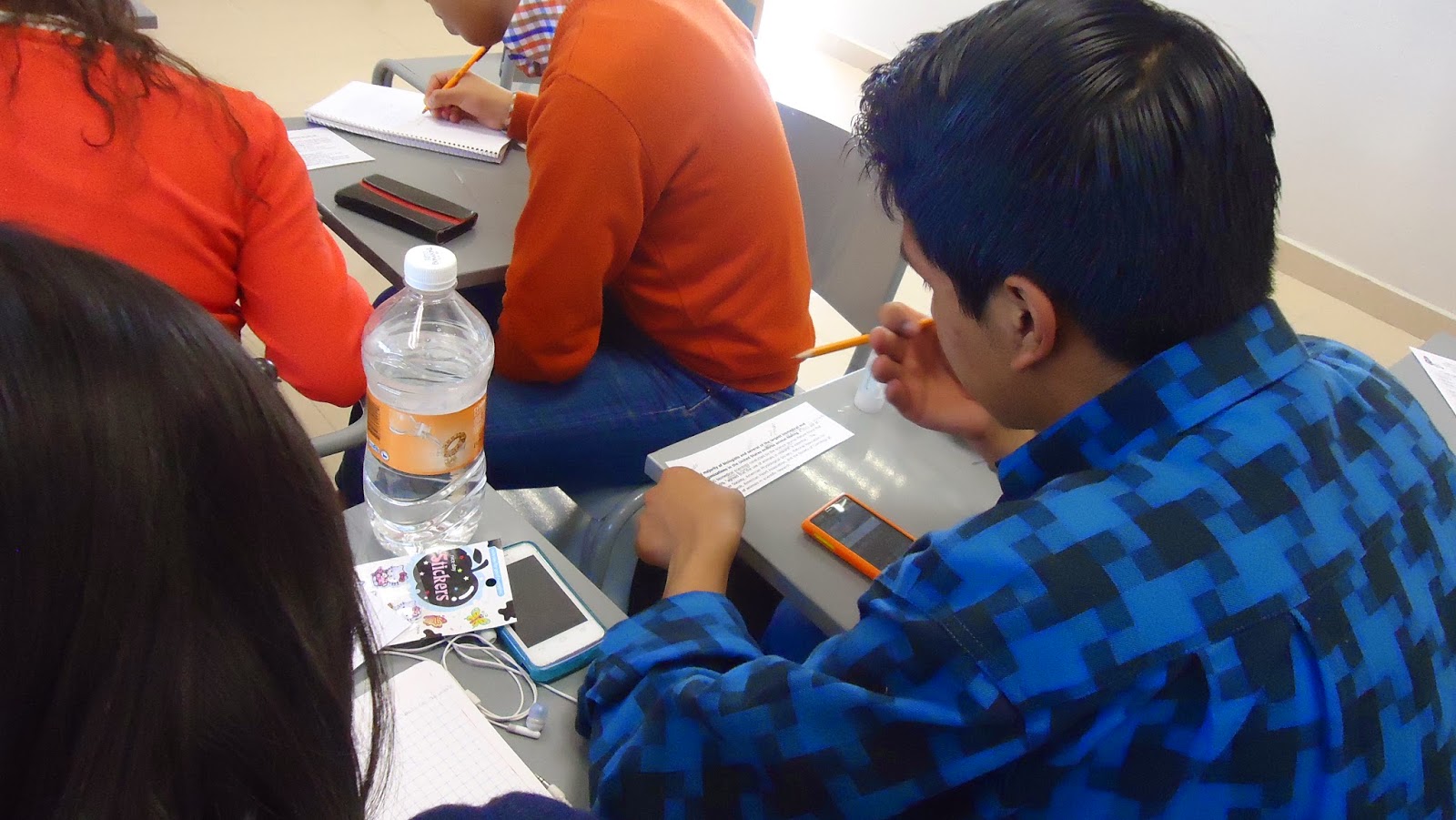
Los alumnos socializaron la información que cada uno juzgo más relevante y de manera colaborativa crearon un cuadro comparativo, organizando los argumentos a favor y en contra en tres categorías.

Pensamiento Crítico
Los alumnos desarrollaron su habilidad de preguntar para clarificar y cuestionar sus creencias, teorías y perspectivas.

Identificación de valores y búsqueda de alternativasLos alumnos desarrollaron su habilidad de preguntar para clarificar y cuestionar sus creencias, teorías y perspectivas.
Los alumnos utilizaron las preguntas guía para realizar un breve reflexión individual y de manera grupal revisar sus preguntas de la fase anterior.
Escenario de ejecución
Después del análisis realizado en las fases anteriores, los alumnos realizaron de manera individual una reflexión final y plan de acción pues su respuesta a la pregunta central (resolución del problema) es una decisión individual.


EVALUACIÓN
MAPAS
DE APRENDIZAJE
|
|||||
EVIDENCIA:
CUADRO COMPARATIVO
|
|||||
DESEMPEÑO
|
PRE-FORMAL
|
RECEPTIVO
|
RESOLUTIVO
|
AUTÓNOMO
|
ESTRATÉGICO
|
Notas con la identificación
de argumentos a favor y en contra de la vivisección en textos escritos en
inglés
|
Obtengo una idea del contenido de la información
|
Identifico información específica relativa a los argumentos
|
Reconozco argumentos relevantes
|
Reconozco argumentos a favor y en contra
|
Reconozco y clasifico los argumentos, obtengo ideas y opiniones
|
Identificación de
parámetros a comparar
|
Tengo una idea de cómo categorizar la información
|
Menciono posibles parámetros o categorías
|
Identifico parámetros o categorías lógicas
|
Identifico parámetros lógicos y relevantes.
|
Identifico los parámetros más relevantes de acuerdo al tema
|
Organización adecuada
de afirmaciones con los datos más relevantes
|
Tengo una idea de cómo organizar los datos obtenidos de la lectura
|
Escribo afirmaciones sustentadas de manera relativamente organizada
|
Escribo afirmaciones sustentadas de manera organizada
|
Identifico los datos más relevantes y los integro al cuadro de manera
organizada
|
Sintetizo la información en afirmaciones con los datos más relevantes y la
organizo de manera adecuada
|
MAPAS
DE APRENDIZAJE
|
|||||
EVIDENCIA:
PREGUNTAS GUÍA PARA LA TOMA DE DECISIÓN
|
|||||
DESEMPEÑO
|
PRE-FORMAL
|
RECEPTIVO
|
RESOLUTIVO
|
AUTÓNOMO
|
ESTRATÉGICO
|
Preguntas a
plantearse antes de tomar la decisión
de practicar la vivisección
|
Planteo preguntas interesantes sobre el tema
|
Planteo preguntas que apoyan mi toma de decisiones
|
Planteo preguntas que guían mi toma de decisiones considerando la
información obtenida
|
Planteo preguntas que guían mi toma de decisiones considerando mis
valores y los datos más relevantes a mis necesidades
|
Planteo preguntas
que clarifiquen y cuestionen mis principios de razonamiento moral y de toma
de decisiones considerando las competencias necesarias en mi área de
especialidad
|
MAPAS
DE APRENDIZAJE
|
|||||
EVIDENCIA:
ESCENARIO DE EJECUCIÓN
|
|||||
DESEMPEÑO
|
PRE-FORMAL
|
RECEPTIVO
|
RESOLUTIVO
|
AUTÓNOMO
|
ESTRATÉGICO
|
Solución del
problema (decisión personal), reflexión final sobre las repercusiones de mi
decisión y argumentos para apoyar mi decisión en el mundo real
|
Planteo ideas
relativas al tema.
|
Planteo posibilidades y datos de apoyo.
|
Tomo una decisión y menciono datos que la apoyan.
|
Ofrezco argumentos sólidos que apoyan mi decisión.
|
Apoyo mi decisión
final considerando las repercusiones, con argumentos morales y prácticos bien
sustentados.
|